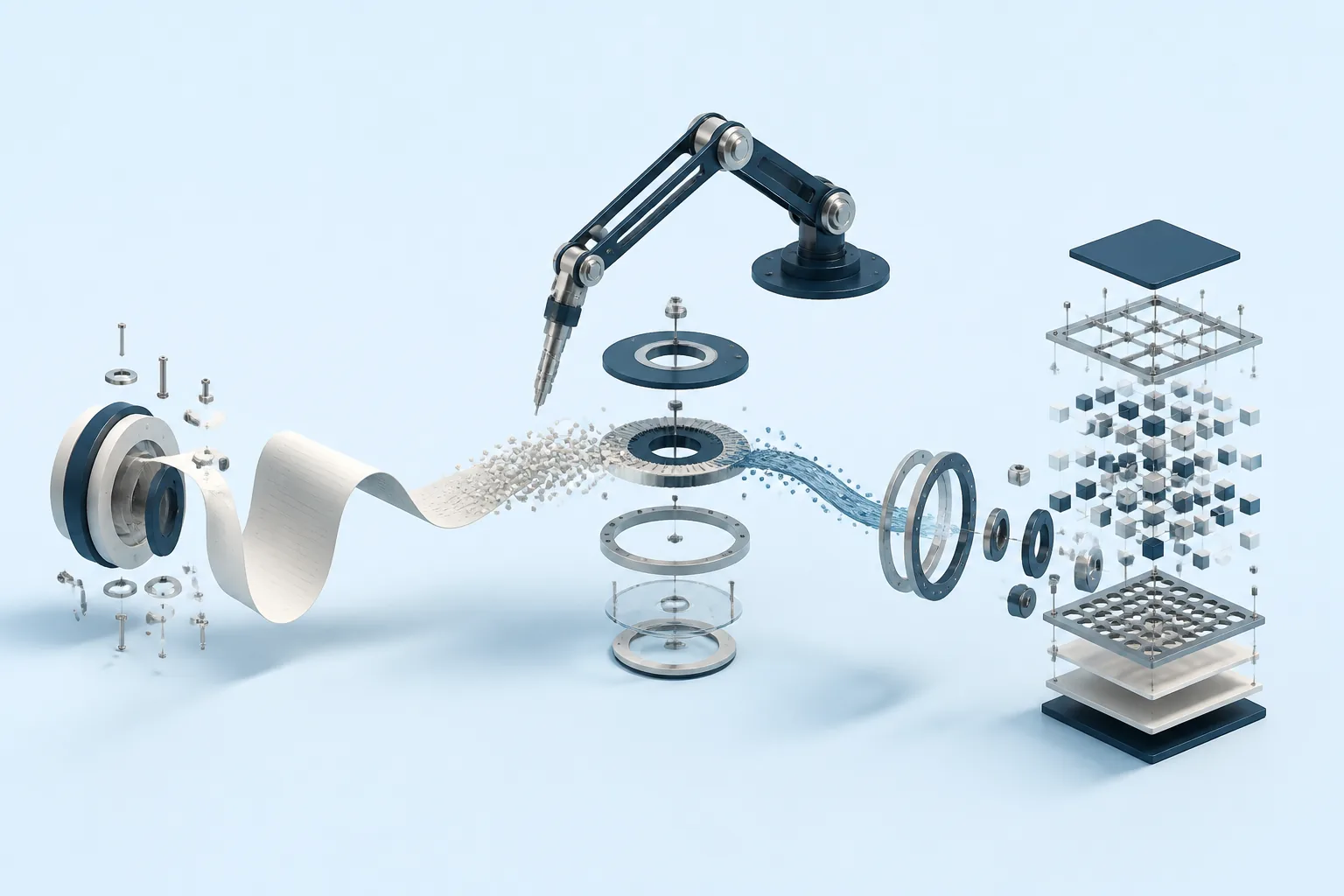
YouTube Transcript API: What It Gives You (and What It Doesn't)
If you're searching "youtube transcript api," you're probably building something and you want a video ID in, caption text out. That's a reasonable, well-defined ask, and there are working ways to do it. But a transcript API and a searchable transcript layer are two different pieces of infrastructure, and it's worth knowing which one you actually need before you wire either up.
This is a developer-focused explainer: what a YouTube transcript API actually returns, where the YouTube Data API stops short, what a raw transcript is genuinely good for, and where retrieval, the layer that turns a transcript into something you can ask questions against, picks up from there.
Quick Answer
A YouTube transcript API returns the caption track for a single video: a sequence of timestamped text segments. It does not chunk that text, embed it, index it, or make it searchable across other videos. If your goal is "get the words that were said in this video," a transcript API is exactly the tool. If your goal is "let someone ask a question and get an answer pulled from the right moment in the right video, across a channel," a transcript API is the input to that system, not the system itself.
How YouTube Transcript APIs Actually Work
There are two practical routes to fetching a transcript programmatically, and they're worth separating clearly.
YouTube's own Data API v3 exposes a captions resource, but it's more restrictive than most developers expect: downloading the actual caption track through the official API generally requires OAuth authorization as the video's owner or channel manager. It isn't a general-purpose "fetch any public video's transcript" endpoint. This is a deliberate limitation, not a bug, and it's the reason a whole category of third-party tools exists to fill the gap.
Third-party transcript APIs work around this by scraping the same caption track a viewer sees in YouTube's own transcript panel, the auto-generated or creator-uploaded captions attached to a public video, and returning it as structured text through a simple endpoint. This is the category most "youtube transcript api" search results point to: send a video ID, get back the transcript, usually billed per request or per credit.
Either route gets you the same basic shape of output: text, broken into segments, each with a start time. What you do with that output from there is a separate problem entirely.
What a Raw Transcript API Is Good For
There's a real, narrow set of jobs where a transcript API is the whole solution, not just a first step:
- Archiving. Storing a permanent text record of a video's spoken content, independent of whether YouTube keeps hosting it.
- Subtitling and accessibility workflows. Feeding caption text into a translation or subtitle-generation pipeline for a single video at a time.
- One-off summarization. Passing a single video's transcript to a large language model for a quick summary, the same job most "youtube transcript ai" tools handle end to end.
- Compliance or content review. Checking the spoken content of a specific video against a policy or a script, one video at a time.
In every one of these, the unit of work is one video, processed once. That's precisely what a transcript API is built to hand you.
Where It Stops Short
The moment the job becomes "let someone ask a question," a raw transcript stops being enough, for reasons specific to how retrieval actually works, not because the transcript is somehow low quality.
- No chunking. A one-hour video's transcript is thousands of words in one continuous block. Handing all of it to a language model for every question is slow, expensive, and prone to the model missing the relevant part in a sea of irrelevant text. Useful retrieval breaks it into smaller, overlapping segments first.
- No embeddings. Finding the right segment for a given question requires comparing the question's meaning against every segment's meaning, not just matching exact words. That comparison runs on vector embeddings, the same mechanism behind retrieval-augmented generation generally, a separate processing step a transcript API doesn't perform.
- No index across videos. A transcript API answers "what does this one video say." It has no concept of "across this channel's 200 videos, which ones are relevant to this question," because it was never given more than one video at a time to begin with.
- No cross-video question answering. Without chunking, embedding, and an index, there's no way to ask a single question and get back the right passage from whichever video actually contains it.
None of this is a shortcoming of any particular transcript API. It's simply a different layer of the pipeline. Our full breakdown of how a RAG pipeline works covers chunking, embedding, and retrieval in more depth if you're building this stage yourself.
Turning Fetched Transcripts Into a Searchable Layer
If the actual goal is a queryable, ask-a-question-and-get-an-answer system over a channel's transcripts, the transcript fetch is step one of a longer pipeline: fetch the caption track, chunk it into passages, embed those passages, index them, then run a retrieval query against that index whenever a question comes in. That's retrieval-augmented generation (RAG) applied specifically to video transcripts instead of documents.
Context Link's YouTube connector runs this whole pipeline per video automatically: it resolves a channel from a URL or @handle, fetches the transcript and description for each video, and runs the same chunking, embedding, and indexing step that every other connected source (Notion, Google Docs, websites, email) goes through. That indexed content is then queryable through the context endpoint or the question endpoint, or from inside an MCP-aware agent through Context Link's MCP server, the same interface used for every other connected source, rather than a separate YouTube-specific API a developer would need to build and maintain on their own.
The distinction that matters for anyone evaluating this: a transcript API is a fetch. A retrieval layer is a fetch plus chunking, embedding, indexing, and a query interface built on top of it. Building the second from the first is real engineering work, chunking strategy, embedding model choice, index maintenance, re-syncing when new videos publish, that a transcript API alone doesn't touch.
The Judgment Calls Chunking Adds
Chunking sounds like a mechanical step, split the transcript into pieces, but the choices inside it change what retrieval actually returns. Cut chunks too small and a passage loses the surrounding context that made it relevant. Cut them too large and a single chunk mixes several unrelated points, which dilutes how well it matches any one question. A transcript also has no paragraph breaks or section headings to chunk along, unlike a blog post or a doc, so a naive fixed-length split will regularly cut a sentence, or an answer, in half.
Re-syncing adds a second layer of upkeep on top of that: a channel that publishes weekly needs its index refreshed on a schedule, and each new video has to go through the same chunk-embed-index sequence as the one before it, not just get appended as raw text. None of this is insurmountable to build. It's just a materially different scope of work than calling a transcript endpoint once and getting text back.
Fetching vs Asking, Side by Side
| Transcript API | Searchable transcript layer | |
|---|---|---|
| Input | One video ID | A channel URL or handle |
| Output | Raw timestamped caption text | Answerable, cited context across every indexed video |
| Scope | One video per request | An entire channel, kept in sync |
| What's missing to go further | Chunking, embedding, indexing, query interface | Nothing, it's already built for asking |
| Best for | Archiving, subtitling, one-off summarization | Research, monitoring, cross-video Q&A |
Frequently Asked Questions
Can I get a YouTube transcript through the official Data API without OAuth?
Generally no, for third-party access to another channel's captions. YouTube's own Data API v3 captions endpoint requires OAuth authorization as the video owner or channel manager to download the actual caption track, which is why most "youtube transcript api" tools instead work from the same public transcript a viewer can already see in YouTube's transcript panel.
Do I need to build my own embedding pipeline to make transcripts searchable?
Only if you're building this from scratch yourself. Fetching a transcript is the easy part; chunking it well, choosing and running an embedding model, and keeping an index in sync as new videos publish is the part that takes real engineering time. Context Link's YouTube connector runs that pipeline automatically once a channel is connected.
Is a transcript API enough to build a "chat with this channel" feature?
Not on its own. A transcript API gives you the raw text for one video at a time. A "chat with this channel" feature needs that text chunked, embedded, and indexed across every video in the channel, plus a retrieval step that finds the right passage for each question, which is the layer sitting on top of the fetch.
Is it cheaper to fetch transcripts myself or use a managed connector?
That depends on volume and what "cheaper" is measuring. Fetching transcripts yourself has a per-request or per-credit cost from whichever third-party API you use, plus the engineering time to build and maintain chunking, embedding, and indexing on top of it, and to keep that index in sync as new videos publish. A managed connector folds the fetch and the retrieval layer into one system, so the comparison usually comes down to whether the build-it-yourself engineering time is worth avoiding for the scale you're working at.
What happens if a video doesn't have captions?
Neither a transcript API nor a retrieval layer built on top of one can produce a transcript for a video with no captions, auto-generated or otherwise. That video simply has no transcript text to fetch, chunk, or index until YouTube generates or a creator uploads captions for it.
The Short Version
A YouTube transcript API does one job well: hand you the caption text for a single video. It's the right tool for archiving, subtitling, and one-off summarization, and third-party wrappers exist precisely because YouTube's own Data API restricts direct access to another channel's captions.
What it doesn't do is make that text searchable or answerable across a channel, because that requires chunking, embedding, and indexing on top of the fetch, a separate layer of work. If what you're actually building is a way to ask questions across a channel's transcripts rather than fetch one video's text at a time, Context Link's YouTube connector runs that full pipeline already, so the question stops being which transcript API to call and starts being what you want to ask.
One search across everything
Connect it once. Every AI can read it.
Context Link indexes your files, drive, email, sites and notes in one place, then hands ChatGPT, Claude and Gemini the same source-backed answers with citations.
7-day free trial · No card to start · Cancel any time