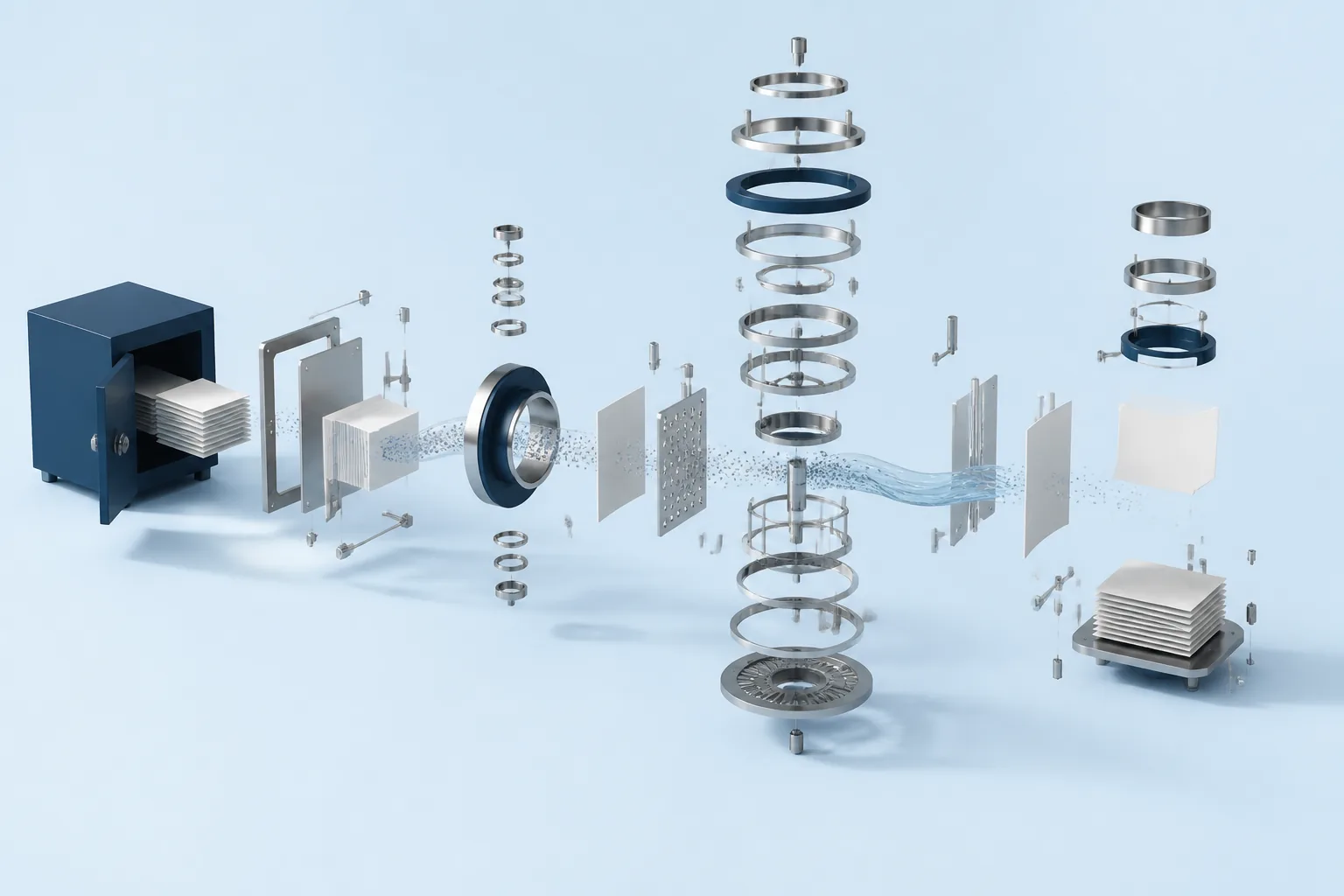
RAG for Claude: 3 Ways to Add Your Business Data

Context Link
Managed RAG service that connects your website, Notion, and Google Docs to Claude in minutes. Live sync, no code, works across all AI tools.

Claude Projects
Built-in RAG that activates automatically when project knowledge exceeds the context window. Zero setup, but limited to manual file uploads.

Custom RAG Pipeline
Build your own retrieval stack with a vector database, embedding model, and Claude API. Full control, but weeks of engineering to set up and maintain.
Claude is one of the most capable AI models available. But out of the box, it doesn't know anything about your business: your products, your brand voice, your support docs, your latest campaign. That's where RAG for Claude comes in.
Retrieval-Augmented Generation (RAG) gives Claude access to your actual data at query time, so it can answer questions, draft content, and make decisions grounded in your company's real information instead of guessing. The result: fewer AI hallucinations, more accurate outputs, and an AI that actually sounds like it works at your company.
This guide covers three ways to add RAG to Claude, from the built-in Projects feature to custom pipelines and no-code managed services. By the end, you'll know which Claude RAG approach fits your team and how to set it up.
What Is RAG and Why Does Claude Need It?
RAG is a technique where an AI model retrieves relevant information from your documents before generating a response, rather than relying solely on its training data.
Here's the core idea: instead of pasting your entire product doc into every Claude conversation, a RAG system automatically finds the most relevant paragraphs and feeds them to Claude alongside your question. Claude then generates a response grounded in your actual data.
Without RAG, Claude has two options when you ask about your business: guess based on its training data (which may be outdated or wrong), or ask you to paste the information manually. Neither scales. RAG solves this by connecting Claude to a searchable layer of your content that it can pull from on demand.
For a deeper introduction, see our plain-English RAG guide.
How RAG Works in Practice

Photo by Agence Olloweb on Unsplash
The process has three steps:
- Index: Your documents (website pages, Notion docs, Google Docs, PDFs) are broken into chunks and stored with semantic embeddings, numerical representations of meaning.
- Retrieve: When you ask Claude a question, the system searches those embeddings for the chunks most relevant to your query.
- Generate: Claude receives those relevant chunks as context and generates a response grounded in your actual data.
Anthropic has published research on contextual retrieval, sometimes called contextual RAG, a technique that adds surrounding context to each chunk before embedding. This Anthropic RAG approach reduces retrieval failures by 49% compared to standard chunking, and up to 67% when combined with reranking. It's a reminder that how you prepare your data matters as much as which model you use.
Claude's Built-In RAG: What Projects Actually Does
Claude already includes a form of RAG. If you're on a Pro, Max, Team, or Enterprise plan, Claude Projects automatically activates RAG when your uploaded knowledge exceeds the context window.
How Claude Projects RAG Works
When you add files to a Claude Project, Claude stores them as project knowledge. For smaller collections, Claude loads everything directly into the context window. But as your project grows, Claude automatically switches to RAG mode, using a project knowledge search tool to retrieve only the most relevant chunks instead of loading everything at once.
This happens transparently. You don't configure anything. Claude decides when to activate RAG based on the volume of project knowledge, and the capacity expands by up to 10x compared to context-only mode.
For small, static document sets (a handful of PDFs, a product spec, a brand guide), Claude Projects RAG works well. Upload your files, start chatting, and Claude handles the retrieval automatically.
Where Claude Projects RAG Falls Short
Projects RAG is a strong starting point, but it has real limitations for business teams:
- File uploads only. You can't connect live sources like your website, Notion workspace, or Google Drive. Everything must be manually uploaded.
- No automatic sync. When your source documents change, you need to re-upload them. There's no live connection keeping project knowledge current.
- No multi-source search. You can't combine your website content, Notion docs, and Google Drive files into a single searchable Claude knowledge base.
- No topic scoping. There's no way to create focused "views" like
/product-docsor/brand-voicethat scope retrieval to specific domains of knowledge. - Claude-only. Project knowledge doesn't transfer to ChatGPT, Copilot, or Gemini. If your team uses multiple AI tools, you're rebuilding context in each one.
- No shared knowledge layer. Each project is siloed. There's no centrally maintained knowledge base shared across projects or team members.
For teams that need live data from multiple sources, or that use more than just Claude, Projects RAG hits a ceiling quickly. That's when a dedicated Claude RAG setup starts making sense.
Three Ways to Add RAG to Claude
There are three main approaches to giving Claude access to your business data through RAG. Each makes different trade-offs on setup time, technical skill, flexibility, and cost.
Option 1: Claude Projects (Built-In, Zero Setup)
Best for: Individuals working with small, static document sets.
Upload PDFs, text files, or markdown to a Claude Project. Claude handles chunking and retrieval automatically. No configuration required.
The catch: You're limited to manually uploaded files, with no live sync to external sources. It only works within Claude, and project knowledge doesn't transfer between tools or team members.
Setup time: 5 minutes.
Option 2: Build a Custom RAG Pipeline (Developer Route)
Best for: Engineering teams with specific infrastructure requirements and the resources to maintain them.
This means building your own retrieval pipeline: a vector database (Pinecone, pgvector, Weaviate), an embedding model, a chunking strategy, and Claude's API for generation. You control every part of the stack. Some teams explore Claude Code RAG setups using MCP servers to connect local knowledge bases directly to Claude's coding environment.
What's involved: Choose and deploy a vector database, write code to chunk and embed your documents, build a retrieval layer, connect it to the Claude API, and host it on cloud infrastructure. Expect ongoing maintenance: re-indexing when content changes, tuning retrieval quality, and managing infrastructure costs.
The catch: Weeks of engineering to build, and ongoing effort to maintain. It's the most flexible option, but also the most expensive in developer hours. Most non-technical teams can't build or maintain this approach.
Setup time: Weeks to months.
Building this for your own customers? Some teams land on a custom pipeline because retrieval has to live inside their product, one index per customer rather than one for the company, so what the product writes or answers pulls from the full context of that customer's business. The honest warning: the demo is the easy part. Scraping is slow and brittle, chunking is judgement calls, embeddings need re-running when content changes, and good retrieval quality is weeks of tuning the scoring even with an AI coding agent writing the scaffolding. Then there is a vector database to host and keep isolated per tenant. Context Link's RAG White-Label API covers that layer: one private vector index per end-customer, built from their website (crawled, and chunked into searchable markdown) and/or the data you feed it from your own API calls, none of which you store or index yourself. Provision by API at signup, then Get context (the matching passages for your own Claude call) or Ask questions (a concise cited answer). Server-to-server, under your brand, $50 a month per 10 customer accounts, and no vector database or scoring algorithm to host. You still build the interface; the docs cover the build.
Option 3: Use a Managed RAG Service (No-Code Route)
Best for: Teams that want RAG for Claude without building infrastructure.
Managed RAG platforms handle the entire pipeline (chunking, embeddings, storage, and retrieval) behind a simple interface. You connect your sources (website, Notion, Google Docs, files, email, and more), and the platform serves relevant context to Claude on demand. And if a tool isn't in the catalogue, the custom-connections skill lets your AI build the connection itself. If Claude can read it, you can push it to Context Link.
Context Link is one example. Under the hood it's a managed RAG workspace that connects to your existing tools, runs semantic search across all connected sources, and returns clean markdown snippets that Claude can use as context. You can set it up as a Claude skill or use the direct link method. No coding required.
Context Link also gives Claude a place to save knowledge back. Memories are named documents an AI can save and update over time (like /brand-voice or /product-specs), so settled decisions stay current for every future conversation, in every connected AI tool.
The key advantage over Projects: managed services connect to live sources that stay in sync, work across multiple AI tools (not just Claude), let teams share a single knowledge base, and give AI a place to save knowledge back, which file uploads can't.
The catch: You're depending on an external service, with less control over retrieval internals compared to a custom build.
Setup time: 10-15 minutes.
For a broader comparison of managed platforms, see our RAG as a service buyer's guide.
Build or Buy: What You Actually Own If You Build It
Most people who search for "RAG for Claude" are not really choosing between three features. They're deciding whether to build this themselves or pay someone. "Weeks of engineering" is the usual summary of the build, and it's not a useful one, because it describes a launch date rather than a commitment.
Here's the straight version, including the cases where building is the right answer.
The Six Things You Now Own
A RAG pipeline isn't a project you finish. It's six moving parts you maintain:
- Ingestion. Something has to fetch the content. That means Notion API pagination, Google Drive OAuth tokens that expire, a crawler that gets past your own site's bot protection, an IMAP loop if email is in scope. Every source is a small integration with its own auth, its own rate limits, and its own way of breaking quietly.
- Chunking. 800 characters or 3,000? Overlap or no overlap? Split on headings, or on tokens? There is no first-principles answer. You find out by testing retrieval and changing it, and every change means re-embedding the corpus.
- Embeddings. Cheap per call, not free at volume, and the model choice is sticky. Switch embedding models and every vector you've stored becomes incompatible, so the whole library gets re-run.
- A vector store. Pinecone, Weaviate, or pgvector in your own Postgres. Either way it needs backups, index tuning as row counts grow, and a cost line that climbs with your content.
- Freshness. The one that quietly kills internal builds. Working out which of 4,000 documents changed since last night, re-chunking only those, and deleting the stale vectors so old answers stop surfacing. Nobody budgets for this, and it's the difference between a system the team trusts and one they stop opening.
- Retrieval quality. Your first version returns plausible-looking chunks and is worse than it looks. Then comes reranking, hybrid keyword plus vector search, stripping navigation and boilerplate, deciding when a hit should expand to the whole document. Anthropic's own contextual retrieval research is the honest yardstick here: 49% fewer retrieval failures purely from preparing chunks differently, 67% with reranking added. That is the distance between a demo and something you'd put in front of your team.
There's a seventh that hides inside the sixth. You can't tell whether any of that tuning helped without an evaluation set: thirty or so real questions with known correct sources, re-run after every change. Without it you're tuning by vibes, and you will make retrieval worse at least once without noticing.
When Building Is the Right Call
Build it when one of these is true:
- Your data can't leave your infrastructure. On-premise, air-gapped, or a regulator who has opinions. No managed service fixes this, and no certification substitutes for it.
- Retrieval logic is your product. Graph traversal, a domain-specific reranker, scoring that encodes something only your business knows. If the retrieval is the differentiator, own it. (If it's per-customer retrieval inside a product you sell, see the note in Option 2 above.)
- You already run a vector database. If pgvector is in your Postgres and someone already owns that surface, the marginal cost of items 3 and 4 drops sharply, and the list above is much less intimidating.
- You're an engineering team with unusual requirements around chunking, model routing, or data handling that no vendor's defaults will satisfy.
- Learning it is the point. Perfectly good reason. Just don't let the prototype become load-bearing by accident.
When Buying Is the Right Call
Buy it when the honest answer to "who owns this in six months" is a shrug.
That's not a knock on your team. It's that a RAG pipeline is undifferentiated plumbing for anyone whose actual product is something else, and undifferentiated plumbing is what gets deprioritised first and rots quietly. The failure mode isn't a dramatic outage. It's that the index drifts three months behind reality, Claude starts citing last quarter's pricing, and people stop trusting it without ever filing a ticket.
Connecting a source takes a couple of minutes and the six items above stop being yours. The trade is real and worth stating plainly: you get our chunking strategy and our scoring, not yours. You can choose which sources are indexed and weight them per use case with Modes, but you can't rewrite the reranker. For most teams that's a good trade. For the five bullets above, it isn't.
The part that's hard to replicate either way is breadth. Claude Projects searches what you uploaded to that project. Native connectors search one tool each, so you have to decide whether the answer is in Drive or in Notion before you're allowed to ask. Connect your sources to Context Link and one query runs across all of them at once, which is usually the actual requirement hiding behind "we should build a RAG pipeline".
If you want to price the buy side against your own content before committing engineering time, connect one source and run your real questions through it. An afternoon of that tells you more about your retrieval requirements than a week of architecture diagrams.
How to Set Up Managed RAG for Claude

Here's how connecting your business data to Claude works using a managed RAG service. The principles apply broadly: the key steps are connecting sources, scoping your searches, and plugging into Claude.
Step 1: Connect Your Sources
Add the knowledge sources Claude should be able to search:
- Website: Enter your domain URL. The service discovers and indexes your blog, help center, product pages, and docs automatically.
- Notion: Connect your workspace via OAuth. Choose specific pages, databases, or spaces to include.
- Google Docs / Drive: Connect Google Drive and select the folders or documents you want indexed.
- OneDrive: Connect your Microsoft OneDrive and select the folders or files you want indexed.
- Files: Upload PDFs, Word documents, or markdown files directly.
Content is chunked, embedded, and kept in sync. When you update a Notion page or publish a new blog post, the index updates automatically. No re-uploading needed.
Step 2: Create Topic-Specific Searches
One advantage over Claude Projects is the ability to scope retrieval by topic. Instead of dumping all knowledge into one bucket, you can ask for context on specific topics:
/brand-voicepulls from your brand guidelines and style docs/product-docssearches your product specs and feature pages/supportretrieves from your help center and FAQ content
These aren't pre-configured folders. They're dynamic semantic searches. Ask for any topic and the system finds the most relevant chunks across all connected sources.
Step 3: Use It in Claude
Two ways to connect Context Link to Claude:
Claude Skills (recommended): Install the Context Link skills into a Claude Project. Claude can then search, save, and update your context in natural language. Ask: "Get context on our pricing page" or "Pull context on brand voice guidelines." If you just want a direct answer rather than raw chunks for Claude to reason over, use /ask-question [question] to get one concise grounded paragraph with numbered citations (Pro plan).
Direct Link: Paste your Context Link URL (for example, yourname.context-link.ai/topic) into a Claude conversation. Claude visits the link and receives the relevant snippets as markdown.
Once connected, your Claude RAG setup gives on-demand access to your entire Claude knowledge base (website, Notion docs, Google Docs, inboxes, project tools, and any saved Memories) through a single semantic search layer, with sources synced every 24 hours.
For more details, see our guide on how to connect your website to Claude.
Choosing the Right Claude RAG Approach
Here's how the three options compare:
| Factor | Claude Projects | Custom Pipeline | Managed RAG |
|---|---|---|---|
| Setup time | Minutes | Weeks | Minutes |
| Technical skill | None | High (Python/JS, cloud, vector DBs) | None |
| Live source sync | No (manual upload) | Yes (if built) | Yes (automatic) |
| Multiple sources | No | Yes | Yes |
| Cross-tool support | Claude only | Depends on build | Claude, ChatGPT, Copilot, Gemini |
| Team sharing | Limited | Yes | Yes |
| Maintenance | Low (re-upload files) | High (infrastructure, tuning) | Low (managed service) |
| Cost | Included in Claude plan | Engineering time + infrastructure | Subscription |
| Retrieval control | Low (automatic) | Full | Medium |
Start with Projects if you're an individual user with a few static documents and you only use Claude.
Build a custom pipeline if you have engineering resources, need full control over retrieval logic, or have enterprise-specific requirements like on-premise hosting.
Use a managed service if your team needs live data from multiple sources, uses more than one AI tool, or wants RAG without the infrastructure overhead.
Most small-to-medium business teams land on the managed route. It gives you most of what a custom pipeline delivers, at a fraction of the setup time and cost.
Real Use Cases: Claude RAG for Business Teams
Photo by Lyubomyr Reverchuk on Unsplash
RAG is the difference between Claude guessing about your business and Claude reading it. Here are three practical scenarios.
Content and SEO Teams
Connect your website, blog archive, and brand docs to Claude. Before every writing session, Claude pulls from your published content, brand voice guidelines, and product facts. The result: AI content that stays on-brand and factually accurate, without re-pasting the same docs into every conversation.
For style references that don't move, save the style guide as a Memory at /brand-voice so Claude fetches it automatically when drafting.
Customer Support
Give Claude access to your help center, support macros, and internal knowledge base. When a support rep asks Claude to draft a reply about SSO setup for Pro plan users, Claude retrieves the relevant help articles, feature docs, and FAQ entries, not a generic guess.
When the team discovers a new solution, save it to a /support-faq Memory so the next reply drafts from the latest answer instead of an outdated one.
Marketing and Operations
Connect your product specs, pricing pages, and campaign docs. Claude can draft proposals, create launch assets, and answer internal questions about "what's the latest offer" without anyone digging through Slack threads or outdated spreadsheets.
For lean teams where one person handles marketing, sales support, and operations, having Claude pull from a single, always-current knowledge layer means fewer interruptions and faster output. Learn more about building a persistent AI memory layer that grows with your team.
Key Takeaways
- Claude has built-in RAG. Projects automatically activates retrieval when knowledge exceeds the context window. For small, static document sets, this is enough.
- Projects has real limits. No live sync, no multi-source search, no cross-tool compatibility. Most business teams outgrow it quickly.
- Three approaches exist: built-in Projects (simple, limited), custom pipelines (powerful, expensive), and managed RAG services (practical middle ground).
- Managed RAG bridges the gap. Connect websites, Notion, Google Docs, and more to Claude in minutes without touching infrastructure. For tools without a pre-built connector, the custom-connections skill lets your AI push content in directly.
- RAG improves over time. As you add sources, refine Memories, and tune your context layer, Claude's outputs get progressively better.
Conclusion
Claude doesn't need to guess about your business. Claude RAG gives it access to your actual data: your website, your docs, your knowledge base. Every response is grounded in reality.
For most teams, the path forward isn't building a vector database or settling for file uploads. Managed RAG services like Context Link let you connect your sources once, keep them in sync, and give Claude the context it needs, in minutes, not weeks.
Connect a source and test your first search with Claude. Once you see the difference between Claude guessing and Claude knowing, the setup pays for itself.
One search across everything
Connect it once. Every AI can read it.
Context Link indexes your files, drive, email, sites and notes in one place, then hands ChatGPT, Claude and Gemini the same source-backed answers with citations.
7-day free trial · No card to start · Cancel any time